
Start with the reader's question
A technical owner needs affected software and device detail. Leadership may need a concise view of progress and remaining decisions. Use the summary and supporting detail together rather than relying on one number.
Security reporting
Turn software findings and remediation work into a clearer conversation with leadership. Use summaries and supported exports to explain progress, unresolved items and the next decisions.
Inspect the real sample screens below.
What your team can do
A technical owner needs affected software and device detail. Leadership may need a concise view of progress and remaining decisions. Use the summary and supporting detail together rather than relying on one number.
Explain which findings still need an owner, which actions need follow-up and which verification results are incomplete. A useful report makes limitations and outstanding decisions visible.
Use supported findings, remediation history and other available reports to support the summary. Confirm report types, scheduled delivery and export requirements against your plan.
EXPLORE THE ACTUAL SAMPLE INTERFACE
Inspect the rows, the findings behind them and the work that remains to be explained.
Review material
The sample report lists individual CVEs, assets and prioritisation context. It demonstrates a review surface, not a live statement about your environment.
Can the reviewer trace a summary item back to the relevant device and finding?
Next handoverState source coverage and unresolved outcomes when sharing a review.
Explore this capability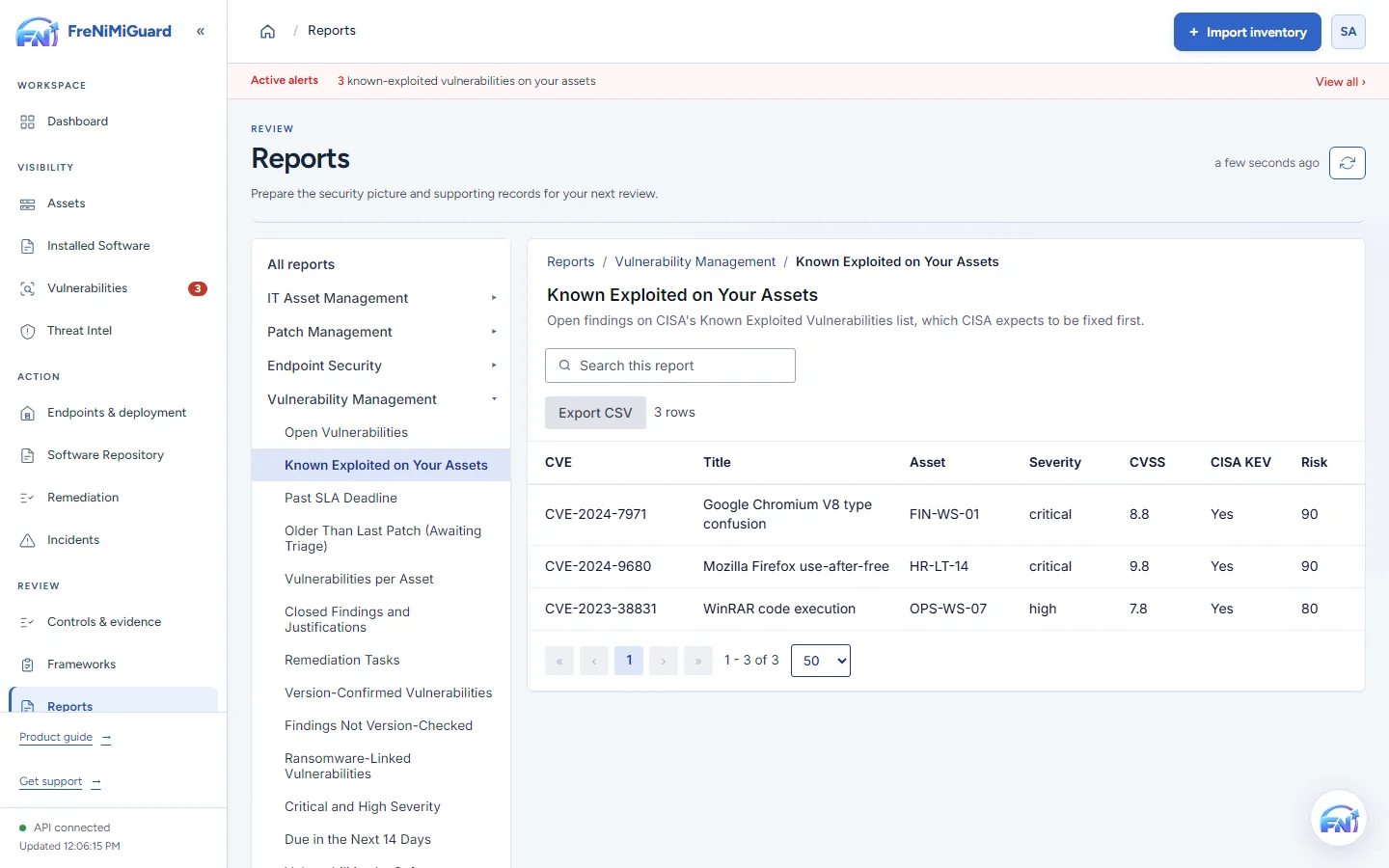
Actual product screenshot with sample records. These screens are not a continuous before-and-after patch test.
Stage: Review material
Evidence boundary: a screenshot shows an interface and sample records. A task note or successful command response alone does not establish an observed endpoint outcome. Watch the existing product recordings →
Review checkpoints
| Checkpoint | What to review | What to keep visible |
|---|---|---|
| Audience | Choose the technical or leadership question. | Use enough context to explain what a summary total includes. |
| Period | Keep reporting and observation dates visible. | A current export can include older source records. |
| Follow-up | Identify unresolved work and accountable owners. | A report does not replace review of missing or uncertain information. |
Questions before rollout
The product tour includes reporting screens using illustrative records. You can inspect the public sample evidence page before discussing your requirements.
Use them as supporting material within your review process. Check source coverage, dates, unresolved work and the available report types for your plan.
Continue exploring
Bring supported devices and installed software into one workspace. Review version details, device ownership and inventory freshness before deciding what needs attention.
Explore capabilityReview software findings with affected-device context and known exploitation information. Give the team a clear starting point for investigation and remediation ownership.
Explore capabilityCoordinate supported updates and software deployments with clear approval and device scope. Use the optional agent for supported actions, with the configuration and permissions your environment requires.
Explore capabilityGive a finding an owner, track the follow-up and keep the result with the task. Distinguish work that was planned, sent, observed and still needs review.
Explore capabilityBring control-review work and supporting records together. Use the tools included in your plan to organise checklists, evidence and available exports.
Explore capabilityBring your device sources, remediation process and review expectations. Agree a supported scope before rollout.